
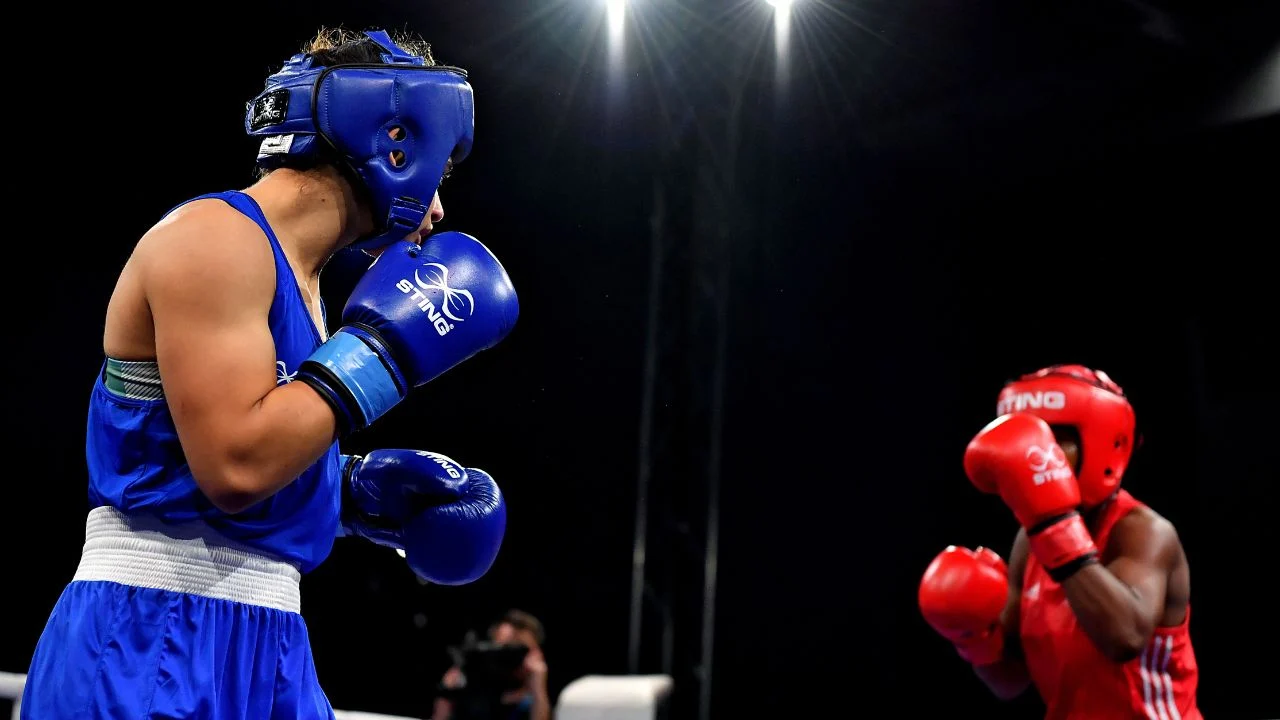
In the late 1960s, a teenager named Habibullah Jaferi ran along the foothills of the mountains surrounding Quetta, throwing punches at the wind. His younger brother, Hasratullah, watched, baffled. “Has Habibullah lost his mind?” he asked passersby. Boxing, Hasratullah explained to anyone who asked, was simply an unknown sport in Balochistan at the time. What the brothers had in common with boys elsewhere in the province was access to a television set, and on that television, whenever Pakistan’s state broadcaster PTV transmitted fights, they watched Muhammad Ali.
That image — mountain foothills, fistfighting in the open air, inspiration borrowed from a screen — is where Quetta’s boxing story begins. It is a story that produced three elite international fighters from a single neighborhood in a single generation, hosted Pakistan’s first internationally sanctioned professional world title bout, and now operates with an infrastructure simultaneously more resilient and more fragile than its history might suggest.
Alamdar Road and the Coaching Lineage
Habibullah Jaferi became not a champion but a coach, which turned out to be the more durable contribution. He represented Balochistan in inter-provincial competition, making his first appearance in Karachi in 1971. Then he stopped competing and started teaching, establishing free coaching sessions six days a week at the Taji Khan Hazara Sports Complex on Quetta’s Alamdar Road. The sessions cost his students nothing. The equipment was minimal. The mountains were visible through the windows.
Over the following decades, Habibullah built a coaching lineage. Abrar Hussain, who grew up in Mehrabad on the same road, trained under him and went on to represent Pakistan at three consecutive Olympics — 1984, 1988, and 1992 — while also winning gold at the 1990 Asian Games in Beijing. Asghar Ali Changezi, who, as a teenager, watched Hussain train and was inspired to join him, won gold at the 1984 South Asian Games at age 17 and at the 1992 Asian Championships in Bangkok, and qualified for the Barcelona Olympics. Haider Ali, the youngest of the trio, won gold at the 2002 Commonwealth Games in Manchester — Pakistan’s only boxing Commonwealth gold ever.
All three came from Alamdar Road. All three trained under Habibullah. A coach, the provincial sports board had never donated a pair of gloves to.
The Hazara Community’s Particular Relationship with the Sport
Quetta’s boxing strength is concentrated within the Hazara community, a Shia ethnic minority, whose neighborhoods on Alamdar Road and in Hazara Town have developed a distinct sporting culture alongside their tight-knit communal structures. Haji Abdul Wahid, who owns the Azaad Boxing Club in the neighborhood, described the pre-violence era as one where Baloch and Hazara students trained together in roughly equal numbers. Boxing was one of the few arenas in which Quetta’s communities mixed freely around shared athletic ambitions.
That integration eroded substantially after sustained sectarian violence targeting the Hazara community intensified in the 2000s and reached its most devastating point in the early 2010s. The January 2013 bombing of a snooker hall on Alamdar Road that killed over 100 people was not an isolated incident but part of a campaign by Lashkar-e-Jhangvi that had already killed Abrar Hussain outside his office in 2011 and prompted Haider Ali to leave the country for the UK. Wahid noted afterward that Hazara neighborhoods had become effectively fortified ghettos, with community members unable to travel freely. “We can’t go outside to practise either,” he said. “We’ve become isolated. It’s like we’re in camouflage here.”
The effect on boxing was concrete. Crowd attendance at events declined sharply because public gatherings felt dangerous. Fighters who might have developed under more stable conditions didn’t. Coach Habibullah, still holding sessions on Alamdar Road years later, put the problem as directly as anyone: “You need to have peace of mind to be a good boxer. Where is the peace?”
The Military and Civilian Dual Structure
Quetta’s boxing infrastructure operates across two parallel tracks that rarely intersect as productively as they might. Military facilities—primarily the Garrison Sports Complex—provide venues that are better maintained, better organized, and more reliably available than most civilian alternatives. The Defence Day Fight Night series, which has run annually around Sept. 6, depends on this military infrastructure and the organizational capacity that comes with it. The Sept. 7, 2021, card at the Garrison Sports Complex, which featured bouts including Muhammad Rehan Azhar from Peshawar against Taimoor Khan, was made possible by that access in ways a purely civilian promoter would have struggled to replicate.
The civilian track — Alamdar Road’s clubs, Hazara Town’s boxing academies, the Balochistan Boxing Academy — operates on community investment and coach voluntarism, with minimal state support from either the provincial sports board or national bodies. The two tracks produce fighters who occasionally appear on the same cards but are shaped by different resource environments.
May 2025 and What It Changed
The most significant event in Quetta’s boxing history in decades took place on May 10, 2025, at the Quetta Polo and Saddle Club. Muhammad Waseem, himself from Quetta’s Baloch Pashtun community with roots in Mastung, organized the first professional boxing event in Pakistan sanctioned by a globally recognized body — the WBA — with support from the Balochistan government, the Pakistan Army, and his own Falcon Sporting Promotions. The card featured 12 bouts, including international fighters from the U.S., Ireland, and the UK, as well as Pakistani fighters. Waseem stopped Venezuela’s Wiston Orono in the ninth round to win the WBA Gold bantamweight title.
The WBA described the night as proof of boxing’s expanding global footprint. For Quetta specifically, it demonstrated that the city could host world-class professional boxing — the logistical capacity, the venue, the crowd — when the right combination of private initiative and government backing aligned.
Whether that translates into sustained infrastructure development for Quetta’s grassroots boxing scene remains an open question. Habibullah Jaferi continues to coach on Alamdar Road. The Balochistan Boxing Academy in Hazara Town continues to offer free sessions and sends fighters such as Ilyas Hussain to compete internationally. The civilian boxing community that produced three generation-defining fighters from a single neighborhood has persisted through circumstances that would have ended most sporting traditions. What it has rarely received is the systematic support necessary to produce those fighters at scale rather than in spite of everything.
